
Beck Weathers’s Return
The ClimbThis flow follows Beck Weathers from disabling vision problems to apparent death and an astonishing recovery from the mountain.
increasing Bearing strength in each event
 decreasing
Bearing strength in each eventdecreasingVision Failure
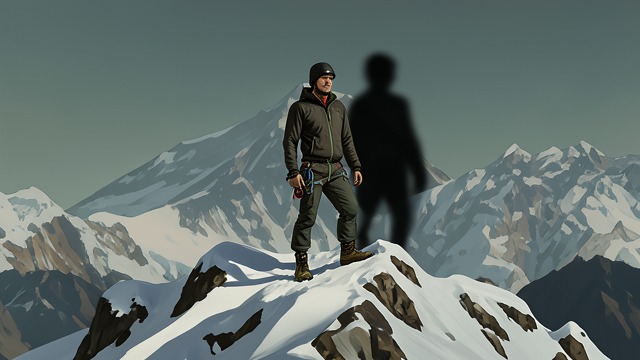
Vision Failure
An Early Warning
Rob Hall tells Beck Weathers not to climb higher because his vision is impaired.
Exposure
Weathers remains high on the mountain as the descent unfolds, separated from the people who might guide him down.
Left in the Storm
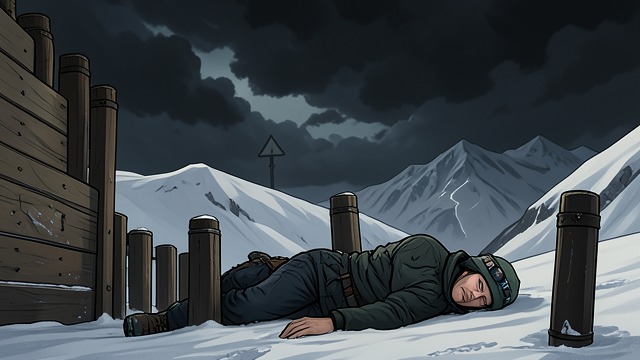
Left in the Storm
Failed Movement
Weathers becomes unable to travel reliably and is left in the storm as other climbers make for camp.
Uncertain Fate
His teammates believe nothing more can be done. His survival becomes one of the night’s most unlikely possibilities.
An Unexpected Approach
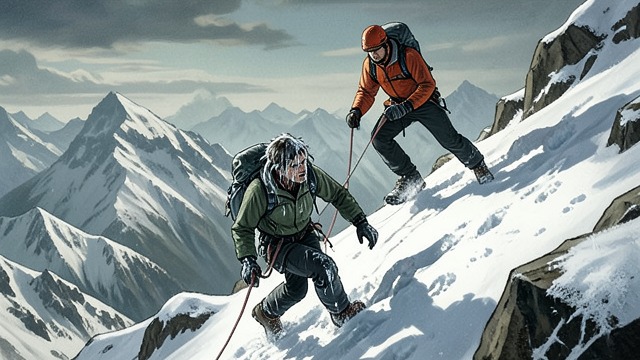
An Unexpected Approach
Apparent Return
As Anatoli Boukreev starts toward Scott Fischer, he encounters Beck Weathers moving down, badly frostbitten and confused.
A Sign of Possibility
Weathers’s survival encourages Boukreev to continue uphill, though it cannot guarantee Fischer will survive.
Evacuation
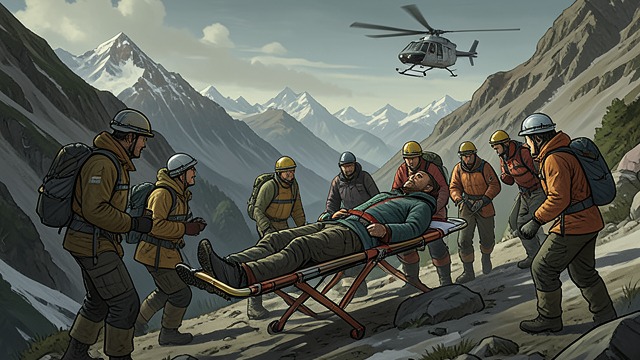
Evacuation
Help from Others
Rescuers and members of other expeditions move Beck Weathers toward a lower camp where a helicopter can reach him.
Survival’s Price
He lives, but extensive frostbite costs him parts of his extremities, marking survival as a profound physical loss.
A Changed Life
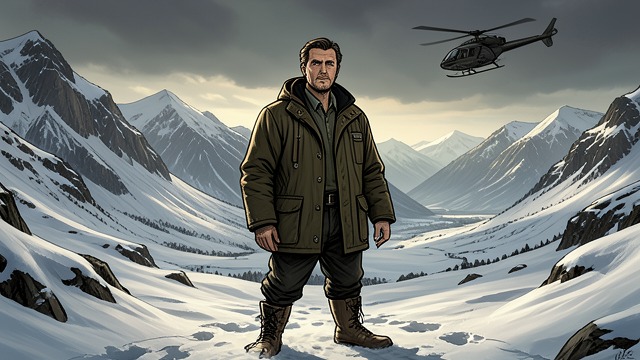
A Changed Life
Recovery
Beck Weathers returns from the mountain after a near-fatal night and a complex evacuation.
Public Memory
His survival becomes one of the tragedy’s most visible stories, illustrating both human resilience and the irreversible bodily cost of extreme exposure.
May 10, 1996, during the descent
night of May 10, 1996
afternoon of May 11, 1996
May 12, 1996
after May 1996
